-
- 02/17/16 | Adjusted: 07/03/18 | 5 files

- Grades 4
- 02/17/16 | Adjusted: 07/03/18 | 5 files
Comparing Fractions Using Benchmarks Game
- Description
- Files
What we like about this task
Mathematically:
- Addresses standards: 4.NF.A.2 and MP3.
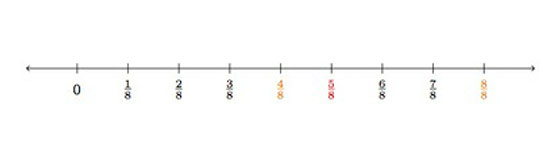
- Allows students to reason about the size of fractions by using benchmarks.
- Requires students to construct a viable argument and use examples to justify their reasoning (MP3).
In the classroom:
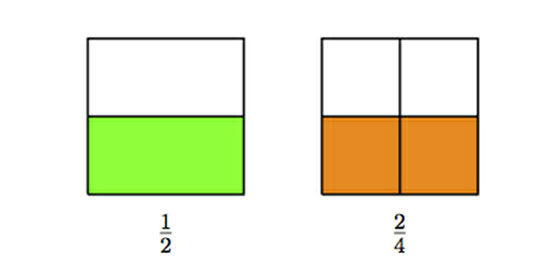
- Provides resources to allow students to compare fractions with or without a visual representation of the fractions the mathematics explicit.
- Prompts students to share their developing thinking and understanding.
- Captures student attention by using an engaging context.
- Allows for student collaboration and discussion.
This task was designed to include specific features that support access for all students and align to best practice for English Language Learner (ELL) instruction. Go here to learn more about the research behind these supports. This lesson aligns to ELL best practice in the following ways:
- Provides opportunities for students to practice and refine their use of mathematical language.
- Allows for whole class, small group, and paired discussion for the purpose of practicing with mathematical concepts and language.
- Includes a mathematical routine that reflects best practices to supporting ELLs in accessing mathematical concepts.
-
Comparing Fractions Using Benchmarks Game
-
Fraction Cards Without Pictures
-
Fraction Cards With Pictures
-
Benchmark Fraction Mat
-
Differentiated Fraction Mat