-
- 09/08/13 | Adjusted: 08/01/18 | 1 file
- Grades 2
- 09/08/13 | Adjusted: 08/01/18 | 1 file
Three Composing/Decomposing Problems
- Description
- Files
What we like about this task
Mathematically:
- Addresses standards: 2.NBT.A and MP.2
- Attends to all three components of the place value system: base-ten units, bundling/unbundling, and positional notation (2.NBT.A)
- Relates concrete quantities and abstract symbols (MP.2)
In the classroom:
- Prompts students to share their developing thinking and understanding
- Uses concrete representations to make the mathematics explicit
- Allows the teacher to check for understanding throughout students' work
This task was designed to include specific features that support access for all students and align to best practice for English Language Learner (ELL) instruction. Go here to learn more about the research behind these supports. This lesson aligns to ELL best practice in the following ways:
- Provides opportunities for students to practice and refine their use of mathematical language.
- Allows for whole class, small group, and paired discussion for the purpose of practicing with mathematical concepts and language.
- Elicits evidence of student thinking both verbally and in written form.
- Includes a mathematical routine that reflects best practices to supporting English Language Learners in accessing mathematical concepts.
- Offers the opportunity for students to act out the problem when the task features complex real-world situations.
How does this task exemplify the instructional Shifts required by CCSSM?
Focus Belongs to the major work of second grade Coherence Develops foundations for multi-digit operations Rigor Conceptual Understanding: primary in this task
Procedural Skill and Fluency: not targeted in this task
Application: not targeted in this task
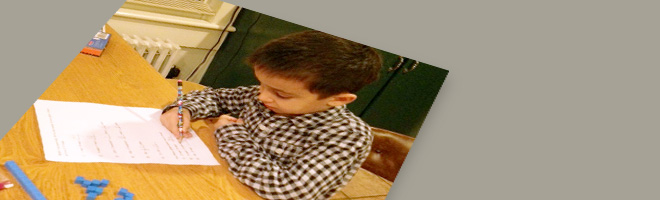
Some students are working with base-ten blocks.
a. Nina has 3 hundreds, 8 tens, and 23 ones. How many ones would this be?
b. Lamar wants to make the number 261. He has plenty of hundreds blocks and ones blocks to work with, but only 4 tens blocks. His friend Jose said,
You can still make 261 with the blocks you have
Explain how he can.
c. Find at least three different ways to make 124 using hundreds, tens and ones.
Standard 2.NBT.A.1 begins "understand that the three digits of a three-digit number represent amounts of hundreds, tens, and ones..."
Words like understand, explain, represent, interpret, and recognize should alert the reader that the expectation for that standard or cluster involves understanding.
For more insight into the progression of place value understanding from grades K-5, read pages 1-11 of the progression document K-5 Number and Operations in Base Ten.
When using manipulatives, it is important for the concrete objects to represent the mathematics faithfully. In this case, the blocks faithfully represent the sizes of the base ten units and the way they recursively bundle/unbundle into one another. However, the blocks do not represent the positional notation of the place value system. Nor do they represent the linear sizes of numbers in the hundreds of thousands. Second, it is important always to connect manipulatives to written symbols and methods. In this case, students connect the base ten blocks to written numerals.
For more information on best practices with manipulatives, read page 19 of the Publishers' Criteria.