-
- 06/06/20 | Adjusted: 08/09/21 | 4 files

- Grades K-High School
- 06/06/20 | Adjusted: 08/09/21 | 4 files
Priority Instructional Content in English Language Arts/Literacy and Mathematics
- Description
- Files
These documents name instructional content priorities in mathematics (K–8, high school) and ELA/literacy (K–12). These were developed for the 2020–21 academic year in response to the disruption of the global pandemic of COVID-19.* They provide guidance for the field about the content priorities by leveraging the structure and emphases of college- and career-ready mathematics and ELA/literacy standards. They are intended to help publishers, other designers of instructional materials, and instructional leaders find new efficiencies in the curriculum that are critical for the unique challenges that have resulted from school closures and anticipated disruptions in the year ahead, keeping at the forefront principles of equitable instruction.
All of the guidance is designed to support planning and decision making. Due to the structural differences between the grade-specific (K-8 mathematics, K-12 ELA/literacy) and course-specific (high school mathematics) guidance, the high school mathematics resource was developed separately. The high school mathematics content was designed in close partnership with Asia Franks and Jaliyla Fraser.
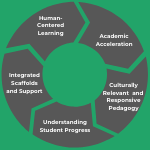
*Note: While these documents were created for the 2020-21 academic year, they remain helpful for those setting academic priorities for the 2021-22 school year. Given the incredible variability of the 2020-21 school year, to maximize the effectiveness of this guidance, the recommendations should be examined and adjusted based on the specific knowledge educators have about what students were able to accomplish and what may need additional attention. In the 2021-22 school year, educators must take into account the unique needs of students and continue to use strong formative assessment practices to understand where there is unfinished learning and to support students in engaging with grade-level content. For more information on academic acceleration and prioritization, integrated scaffolds and support, human-centered learning environments, culturally relevant pedagogy, and methods for understanding student progress, see our Priorities for Equitable Instruction: 2021 & Beyond page.
-
2020–21 Support for Instructional Content Prioritization in High School Mathematics
-
2020–21 Support for Instructional Content Prioritization in High School Mathematics word
-
2020–21 Priority Instructional Content in English Language Arts/Literacy and Mathematics word
-
2020–21 Priority Instructional Content in English Language Arts/Literacy and Mathematics PDF
-
Creating Supportive Learning Environments (CASEL)
-
Integrating Social, Emotional, and Academic Learning: An Action Guide for School Leadership Teams (The Aspen Institute)
-
SEL Roadmap: Actions for a Successful Second Semester (CASEL)
-
A Pathway to Equitable Math Instruction: Creating Conditions to Thrive (Various Contributors)
-
Addressing Unfinished Learning After COVID-19 School Closures (CGCS)
-
Learning Acceleration Guide (TNTP)
-
Addressing Unfinished Learning (Instruction Partners)
-
A Pathway to Equitable Math Instruction (Various Contributors)
-
Social Justice Standards (Learning for Justice)
-
Guide for Selecting Anti-bias Children’s Books (Social Justice Books)
-
Talking About Race program (Smithsonian)
-
Equity in Education Collection (Peers & Pedagogy)